
73
- Years old · Active training 6 days/week
For men who intend to lead, perform, and desire at full capacity
— for decades.
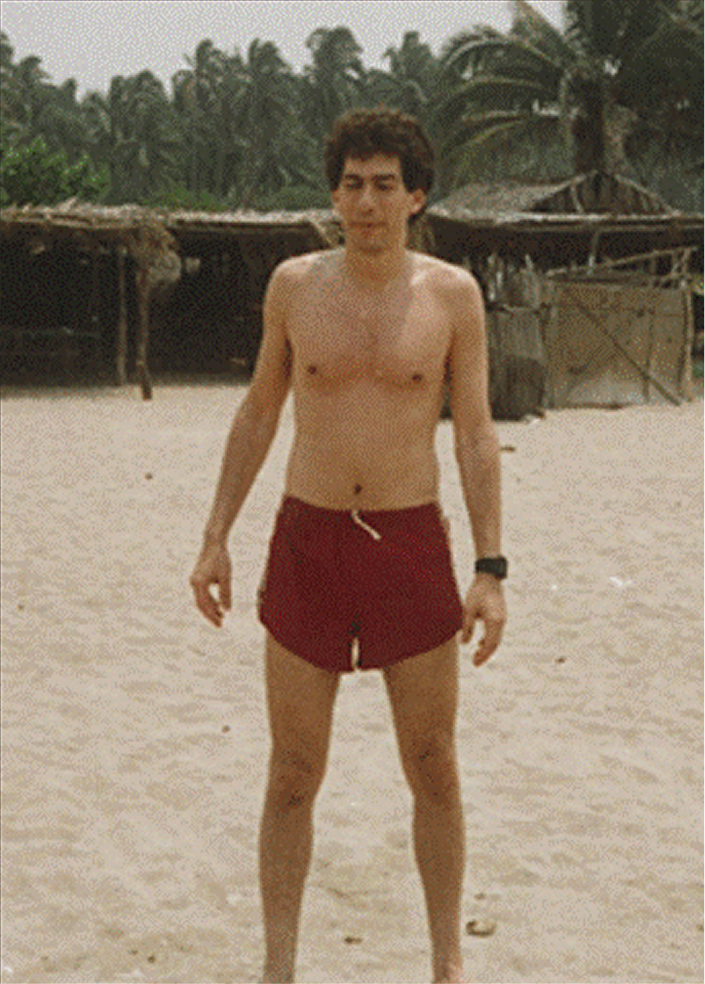
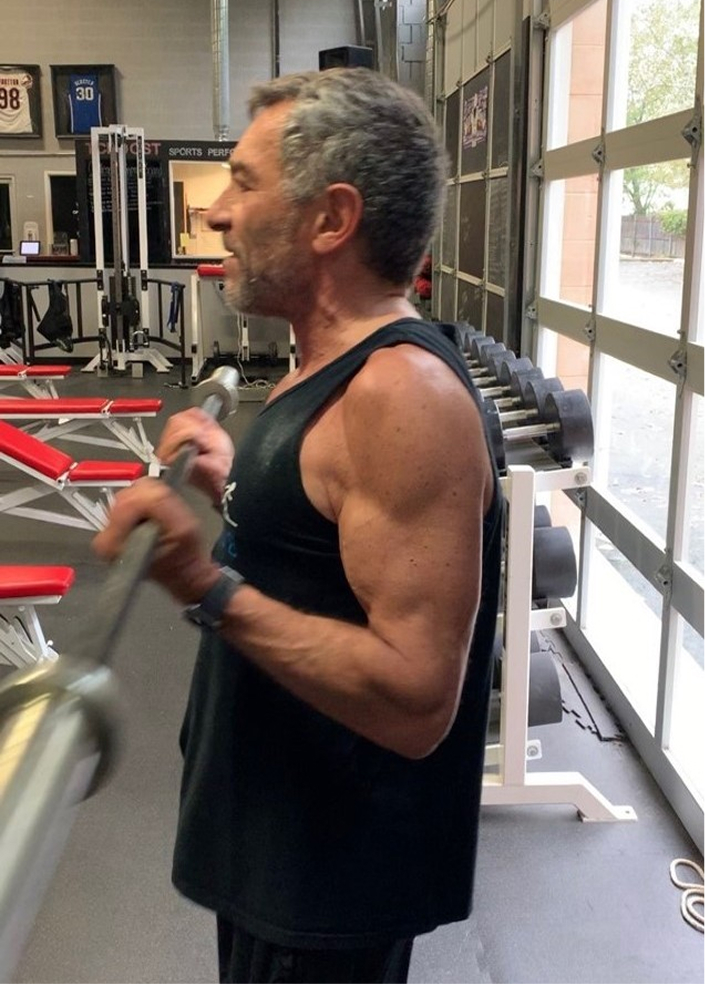
"Decline is not destiny. It is the default outcome of an unmanaged system. These are the same person — separated by four decades and a precise protocol."
There is no single moment of collapse. There is a gradual erosion — quiet, cumulative, and camouflaged by the same drive and discipline that built the career. The schedule stays full. The commitments remain. But something has shifted.
Energy that used to be reliable fades by mid-afternoon. Focus sharpens less easily and holds for shorter windows. Recovery after training takes longer. Sleep is adequate but not restorative. Body composition shifts despite discipline — visceral fat accumulates while muscle quietly declines. Libido decreases. Mood flattens. The edge that was always there has softened.
Laboratory values return as "normal." And therein lies the problem. Normal ranges define the absence of disease. They do not define peak function.
The symptoms men experience in their forties, fifties, and sixties are not fate. They are biology operating without direction. Hormonal architecture shifts gradually — testosterone declines, insulin resistance creeps upward, inflammatory load accumulates, mitochondrial efficiency drops. None of it is dramatic. All of it is measurable. And most of it is reversible.
The men who perform at the highest level for the longest time are not the ones who push harder. They are the ones who measure precisely, recalibrate continuously, and treat their biology with the same strategic rigour they apply to everything else.
At seventy-three, Dr. Rosenbloom trains six days a week — including MMA and Spartan racing. His lean muscle mass has increased. His VO₂ max exceeds that of men decades younger. His cognitive testing scores have improved measurably over four years. His metabolic markers outperform the majority of men in their forties.
Both of his parents developed Alzheimer's disease. His father underwent quadruple bypass surgery at seventy-three — the age Dr. Rosenbloom is now. He has a different trajectory. And he built it deliberately. This is not exceptional genetics. It is the precise application of every framework offered through this practice.
Leadership requires output. Output requires a body that holds. The objective is not normalization — it is calibration toward sustained performance.